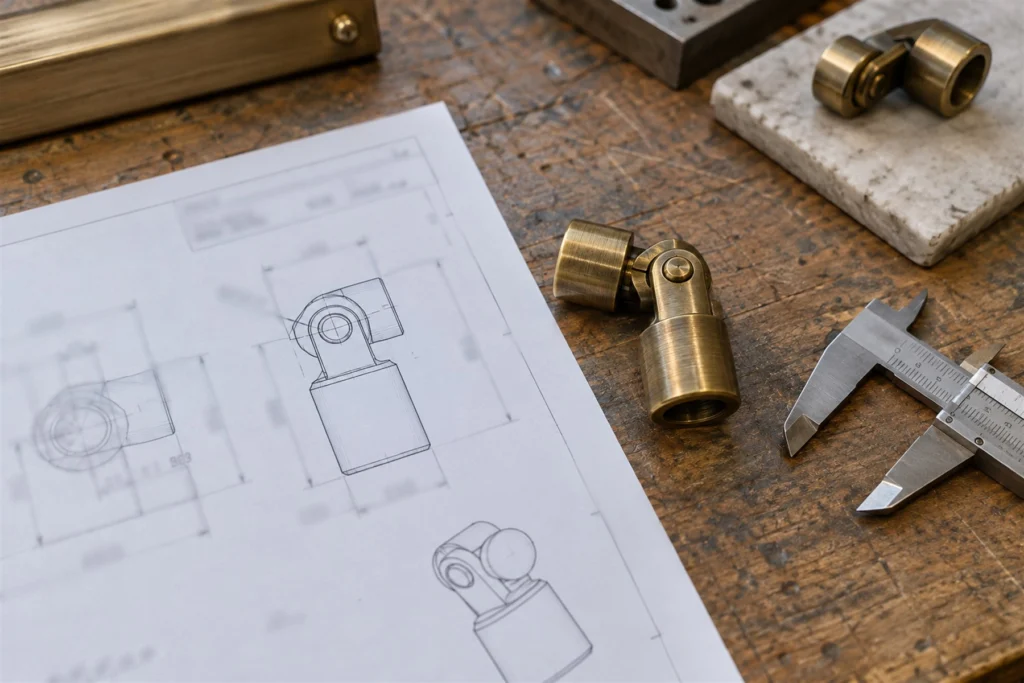
OEM / ODM

From a model in the range to a product of your own.

Four levels of cooperation: an existing product, private label customization, a minor modification, or full custom development. Which one applies is decided in our engineering review first, and the project is quoted after that.

01 — Four levels

Four levels of cooperation,
and no fifth one.

Every requirement is matched to one of the four levels below. A level says where the work starts, what we do, what you provide, and what is confirmed before production.

Whether a project can be customized, and the tooling, sampling, MOQ and lead time terms that apply, are confirmed per project by email before quotation.

Two limits hold at every level: not every model in the range can be modified, and not every requirement can be developed as a new product. Feasibility is answered after a technical review, not before one.

Level 01

Standard Product

A model from the current range, supplied as it is.

Where it starts
A published model in the range, at its standard finish, size, electrical parameters and packaging.
What we do
Supply the model as it is specified, with the finish options the model already carries, under the standard terms for existing products.
What you provide
The model, the finish, the quantity and the target market.
Usually confirmed
Model and finish, quantity, shipping terms, delivery date, and packaging artwork when you supply your own.
Fits when
You are testing a market, filling a range, or ordering before committing to a change.

Level 02

Private Label Customization

The same product, carrying your brand.

Where it starts
A model in the range whose mechanical and electrical design stays as it is.
What we do
Put your nameplate and logo on the product and, where the project needs it, your packaging and manual.
What you provide
Logo files, nameplate wording, packaging artwork and manual text that you own or are entitled to use.
Usually confirmed
Nameplate and logo placement, packaging and manual artwork, packaging format, quantity and delivery.
Fits when
You sell under your own brand and the product itself is right as it stands.

Level 03

Minor Modification

A model changed within limits, not redesigned.

Where it starts
An existing model that is close to the requirement: a finish, a dimension, an electrical parameter or a control function.
What we do
Review the change against the model, adjust the specification where the design allows it, and confirm the result against a sample.
What you provide
The requirement in numbers where you have them: target size, finish, electrical parameters, control behaviour, mounting and target market.
Usually confirmed
Drawing, sample, packaging, certification and tooling questions: whether the change can be made, and what it costs, is confirmed after technical review.
Fits when
The range almost meets the requirement and a new product is not justified.

Level 04

Full Custom Development

A product developed for your requirement.

Where it starts
A requirement that no model in the range meets, described closely enough to be reviewed as a product.
What we do
Review the requirement with engineering, propose a direction, develop the drawings and a sample, and produce it once the specification is confirmed.
What you provide
Intended use, target market, target size and finish, electrical parameters, control and mounting requirements, packaging direction and the volume you expect.
Usually confirmed
Feasibility, tooling, sampling, MOQ, cost, certification and lead time: each of them per project.
Fits when
You are building a range of your own, or a product you intend to keep selling.

02 — Which one is yours

Four questions
point at one level.

Answer these for yourself, then name the level in your enquiry. If more than one of them fits, the highest one applies, because it contains the others.

Level 01 — Standard Product

Standard Product

  • A model in the range already does what you need.
  • Its standard finish, size and electrical parameters are enough.
  • You are ordering the product, not a change to it.

Then the level is 01: the order follows the standard terms for existing products, and the models are listed on the Products page.

See level 01

Level 02 — Private Label Customization

Private Label Customization

  • The product itself is right as it stands.
  • You sell under your own brand.
  • You need your logo, nameplate, packaging or manual on it.

Then the level is 02: the product is unchanged, and your brand goes on the product and on what it ships in.

See level 02

Level 03 — Minor Modification

Minor Modification

  • A model is close to the requirement, but not close enough.
  • You need a different finish, dimension, electrical parameter or control function.
  • You do not need the product designed again.

Then the level is 03: the change is reviewed against the model it starts from, and confirmed against a sample.

See level 03

Level 04 — Full Custom Development

Full Custom Development

  • No model in the range meets the requirement.
  • You need a product developed for your requirement.
  • The volume you expect can justify development, tooling and sampling.

Then the level is 04: the requirement is developed as a product, with tooling, sampling and terms confirmed per project.

See level 04

The level named in an enquiry is a starting point, not a promise. Whether the change can be made is answered after the technical review, per model and per project.

03 — How we work together

From the first enquiry
to the repeat order.

Six steps, in this order. The commercial questions are answered before production, in writing, and the specification that is confirmed is the one that is produced.

  1. Step 01 — Requirement

    Your requirement

    You send the model or the requirement, the quantity, the target market, and the drawings or brand files you already have. Sales takes the enquiry and the standard reply time applies.

  2. Step 02 — Engineering

    Feasibility review

    Engineering checks the requirement against the model, or against the range: mechanical fit, electrical parameters, controls, mounting, and what a change would imply for certification. The yes or no comes out of this review.

  3. Step 03 — Quotation

    Quotation and terms

    A feasible project is quoted in writing, with the tooling, sampling, MOQ, lead time and trade terms that apply to that project. None of those are published on this website.

  4. Step 04 — Sample

    Sample and confirmation

    Where the project needs one, a sample is made and the specification is fixed against it: finish, dimensions, electrical parameters, controls, nameplate and packaging. Sampling is charged.

  5. Step 05 — Production

    Production and delivery

    The confirmed specification goes into purchasing, production and assembly at the Shenzhen factory, with quality checks during production and before shipment. Delivery follows the trade terms confirmed for the order.

  6. Step 06 — Repeat order

    Repeat orders

    The confirmed specification is kept as the reference, so a later order refers to the same model, finish and packaging instead of starting again from the requirement.

The factory side of a project, from engineering confirmation through purchasing and assembly to shipment, is described on Manufacturing & Delivery. The checks and tests a product goes through are on Quality & Testing.

Standard terms for an existing product

These are the terms for a model ordered as it is. A customized project has its own tooling, sampling, MOQ and lead-time terms, confirmed per project by email before quotation.

MOQ

100 pcs

Production lead time

3–4 weeks

Warranty

2 years

Quotation validity

15 days

Trade terms

EXW, FOB

We reply to normal enquiries within one working day.

04 — What a customization involves

The details a project
touches.

Which of these apply depends on the level and on the model. The list below is what a customization usually involves; it is not a promise that every item is available on every model.

Sample checked against the specification
  • Logo and nameplate: your brand on the product, and the wording that goes with it.
  • Packaging and manual: the packaging the product ships in, and the manual inside it.
  • Dimensions: length, depth or span, where the design allows the change.
  • Finish and surface treatment: the colour and the treatment of the visible parts.
  • Colour temperature and light output: the light the product produces, for the use you have in mind.
  • Electrical parameters: the supply the product is built for, as the target market requires.
  • Controls and functions: how the light is switched, dimmed or adjusted, and which functions it should offer.
  • Mounting and installation: how the product is fixed, and what it is fixed to.
  • Certification and target market: which market the product has to be acceptable in, and therefore which certification is relevant. Certification is confirmed by model and target market by email.
  • Tooling and sample fees: whether the project needs tooling at all, and how sampling is handled. Tooling terms are not published on this website.
  • MOQ and lead time: the quantity the project needs and the date it has to arrive by; both are confirmed per project.

Price, tooling terms and certification status are not published here. They are confirmed per project by email before quotation, together with the sampling, MOQ and lead time terms that apply.
What a project leaves behind

A signed sample,
and the parts that carry your name.

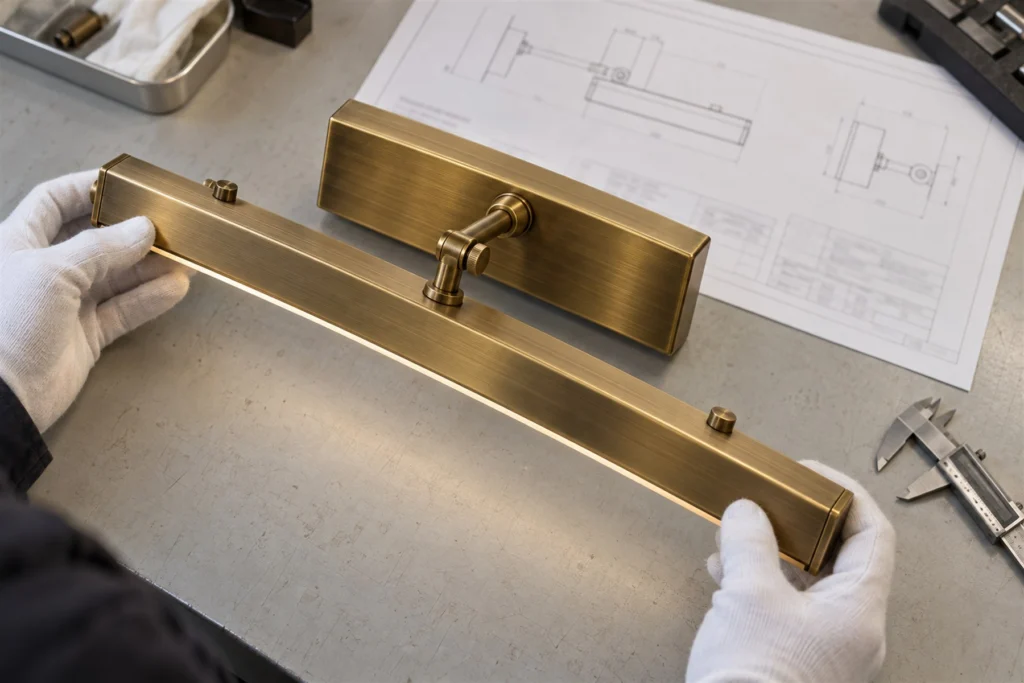
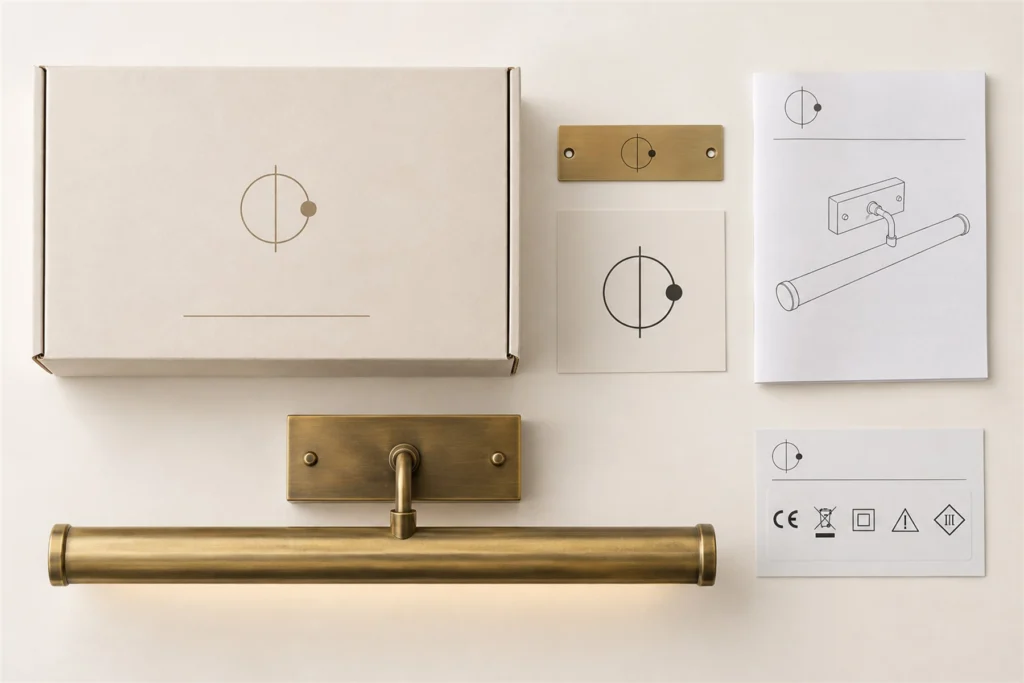
Two things a customization produces: the sample the buyer signed, and everything printed on the product and the box. Both are made for one project and kept for the order that follows.

Nameplate, logo and retail packaging made for one project
Custom parts Nameplate, logo, retail box and manual as supplied for a project.
Drawing and confirmation sample on the bench
Engineering confirmation The drawing and the confirmation sample a project is checked against.

05 — Questions

The questions
a project turns on.

Short answers, at the level this website can carry. What applies to a specific model, a specific market or a specific project is confirmed by email, before there is a quotation.

Does a modification mean the product has to be certified again?

It depends on the change, the model and the target market, so it is not answered here. Certification is confirmed by model and target market by email: we say which certificate applies to the model you are buying, and what a change does to it.

Can we send you our own drawings or artwork?

Yes. Drawings, brand files and packaging files can come with the enquiry, and engineering reviews them against the model or against the new requirement. Sending them does not commit either side to a project.

How many sample rounds does a project take?

There is no fixed number: it depends on the level, on the change and on how quickly the specification settles. Sampling is charged, and sample cost, freight and sample lead time are confirmed by email.

What do you need from us for private label?

Your logo files, the nameplate wording, the packaging artwork and the manual text, from the party that owns them or is entitled to use them. Placement and artwork are confirmed per project before production.

Does customization change the lead time?

An existing product is produced under the standard production lead time of 3–4 weeks. A customized project has its own schedule, because tooling, sampling and component lead times come before production; the date is confirmed per project by email.

Can every model in the range be modified?

No. Not every model can be modified, and not every requirement can be developed as a new product. Feasibility comes out of the engineering review, per model and per project.

Anything that depends on your model, your market or your volume is answered in writing once the requirement has been reviewed.

Tell us what you are sourcing

Send the models, quantities, finishes and target market you are working with. We reply with availability, lead time and the next step.