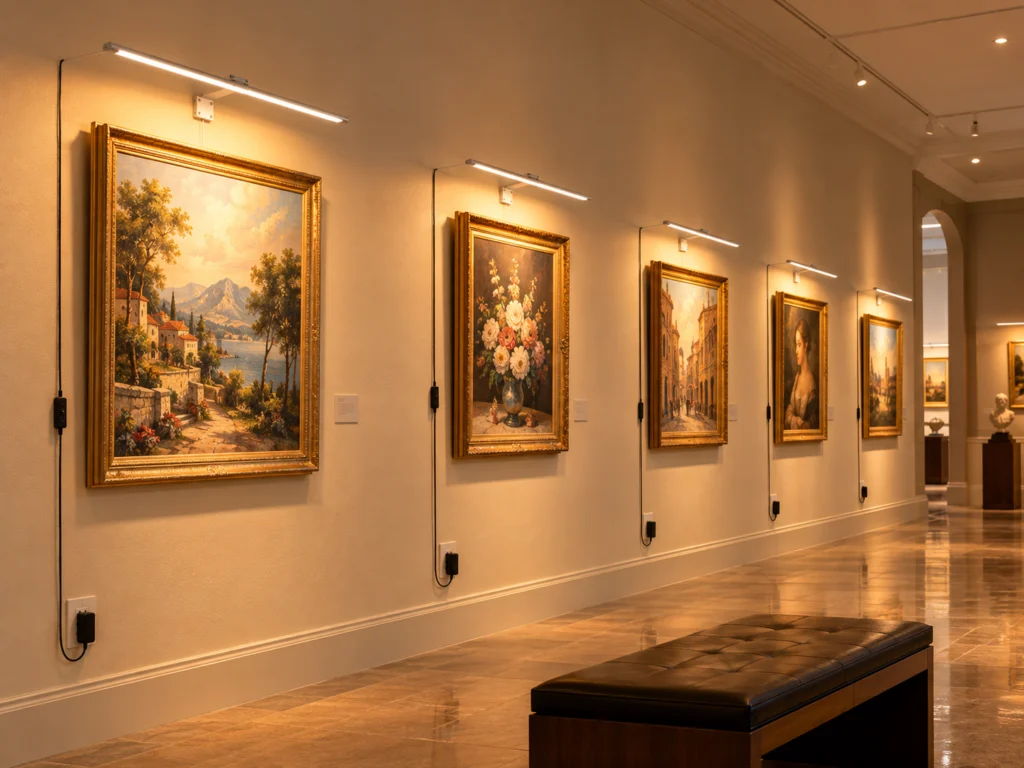
Museums & Galleries
Picture and wall lights for rooms where objects are displayed and looked at closely: the light has to reveal the surface without putting the source in the viewer's eye.
3 published models name this space.
Read the space guideApplications
Each space is a page of its own: what that space is like to light, what power is actually available in it, and how to choose between picture lights and wall lights there. They are not the product catalogue repeated — each one adds the site conditions and the selection advice behind a specification.
Space guides
Each guide names the pain points that belong to that space, its mounting, power and lighting conditions, and the models that fit them. The related products and case studies are found by reverse query, so a space is described once and linked everywhere it matters.
Picture and wall lights for rooms where objects are displayed and looked at closely: the light has to reveal the surface without putting the source in the viewer's eye.
3 published models name this space.
Read the space guide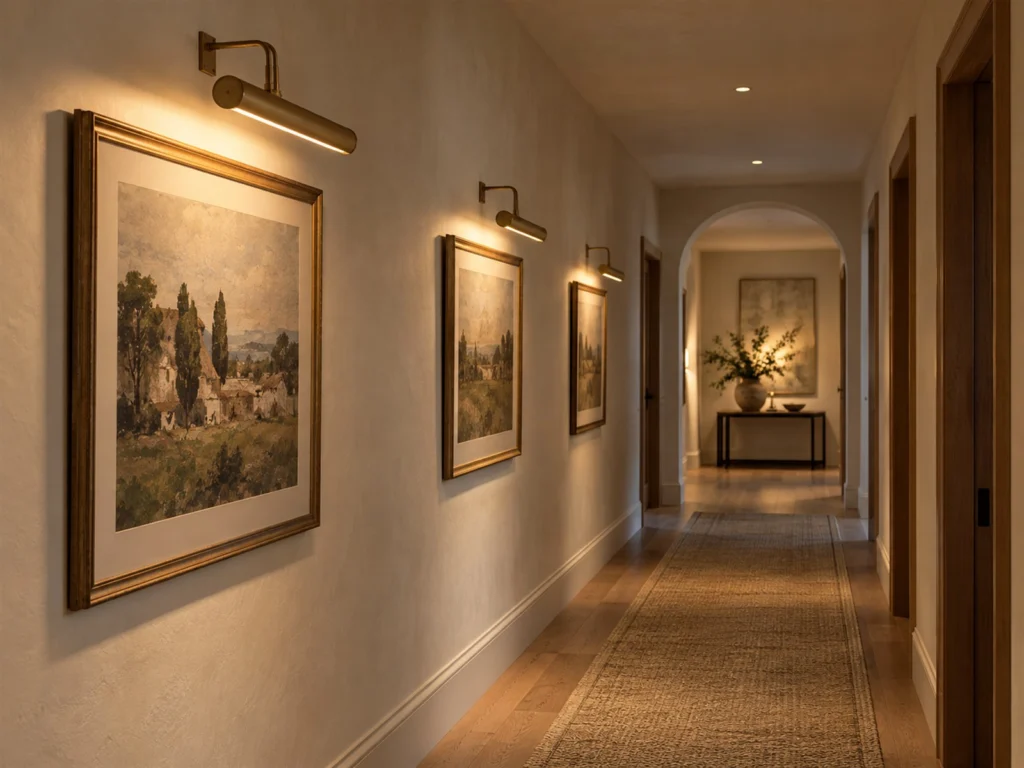
Wall and picture lights for hotel and restaurant interiors, where the fitting is part of the room during the day and the light source during the night.
5 published models name this space.
Read the space guide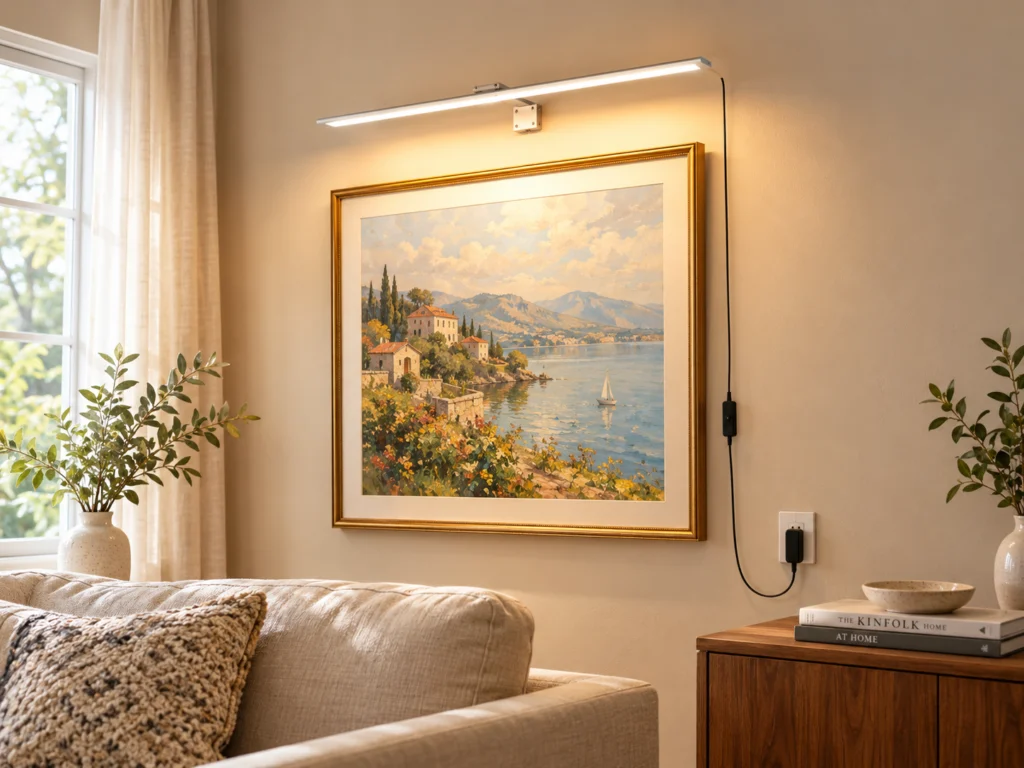
Picture and wall lights for domestic interiors, where the fitting has to sit on a wall that is already finished and usually carries a picture, a mirror or a shelf.
Read the space guideSelection primer
Five conditions decide which picture light or wall light a specification can consider, and all five can be answered before a model is chosen: the wall itself, whether a supply can reach the position, how the piece is seen, how the fitting is proportioned against the piece, and whether the position can be powered at all. Every space guide records the same five for its own space. They are described in general terms here — the figures behind them belong to a model, and are confirmed per model by email.
What the wall is made of, and how thick it is, decides the fixing: plaster, plasterboard, panelling, brick and stone each hold a fitting differently, and a thin panel may need an anchor or a batten behind it. The bracket a model comes with, and the weight it has to carry, belong to the same check.
Whether a permanent supply can be brought to the position, whether the wall is already finished and cannot be opened up again, and whether the cable and the driver can be hidden behind the fitting. Where none of that is possible, the choice moves to a plug-in or a rechargeable model.
How far the viewer stands from the piece sets how far the light has to spread and how bright the pool on the surface may be. Too close or too bright, and the viewer sees a hot spot, a reflection or the lamp itself instead of the work. Colour temperature and luminous flux are recorded per model in its specification.
A picture light is read as part of what it lights. Compare the published dimensions of a model with the width of the piece, and check the overhang at the two ends: too short reads as a spotlight, too long runs past the work and lights the wall beside it.
Where there is no supply at the position, and no way to run one, a rechargeable model is the only option — and then charging time and estimated runtime are the two figures to compare. Both are recorded per model in its specification.
Every model is made in exactly one of the three, and it is one of the filters on the product range. The site decides which one is possible, not the other way round.
01 — Hardwired
Chosen where a supply can be brought to the position and hidden, so no cable or plug stays on view. The position has to be settled before the wall is closed up again, and a model records how it is installed in its installation type.
02 — Plug-in
Chosen where a socket is within reach, a cable on view is acceptable, and the wall is to stay closed. Nothing is wired at the position, so what to check is the distance to the socket and whether the cable can be dressed out of the way.
03 — Rechargeable
Chosen where there is no supply and no way to run one: the model carries its own battery, so the wall is never opened. Charging time and estimated runtime are the two figures to compare, and both are recorded per model.
The other half of the same decision is the range itself: picture lights and wall lights, filterable by power type, product category, finish and product style. If you would rather describe the space first, send us the mounting surface, the viewing position and the power that is available — a normal enquiry is answered within one working day.
Certification requirements and applicable documents are confirmed by model and by target market. This website publishes no prices, stock levels or certification status.
Send the models, quantities, finishes and target market you are working with. We reply with availability, lead time and the next step.